How to Remove an Off-Topic Google Review
Google reviews should describe an experience at the specific place or business. Political speeches, general social commentary, personal rants, and complaints about an entirely different company may fit Google’s off-topic policy.
Policy-based guidance, reviewed September 2026.
Quick answer
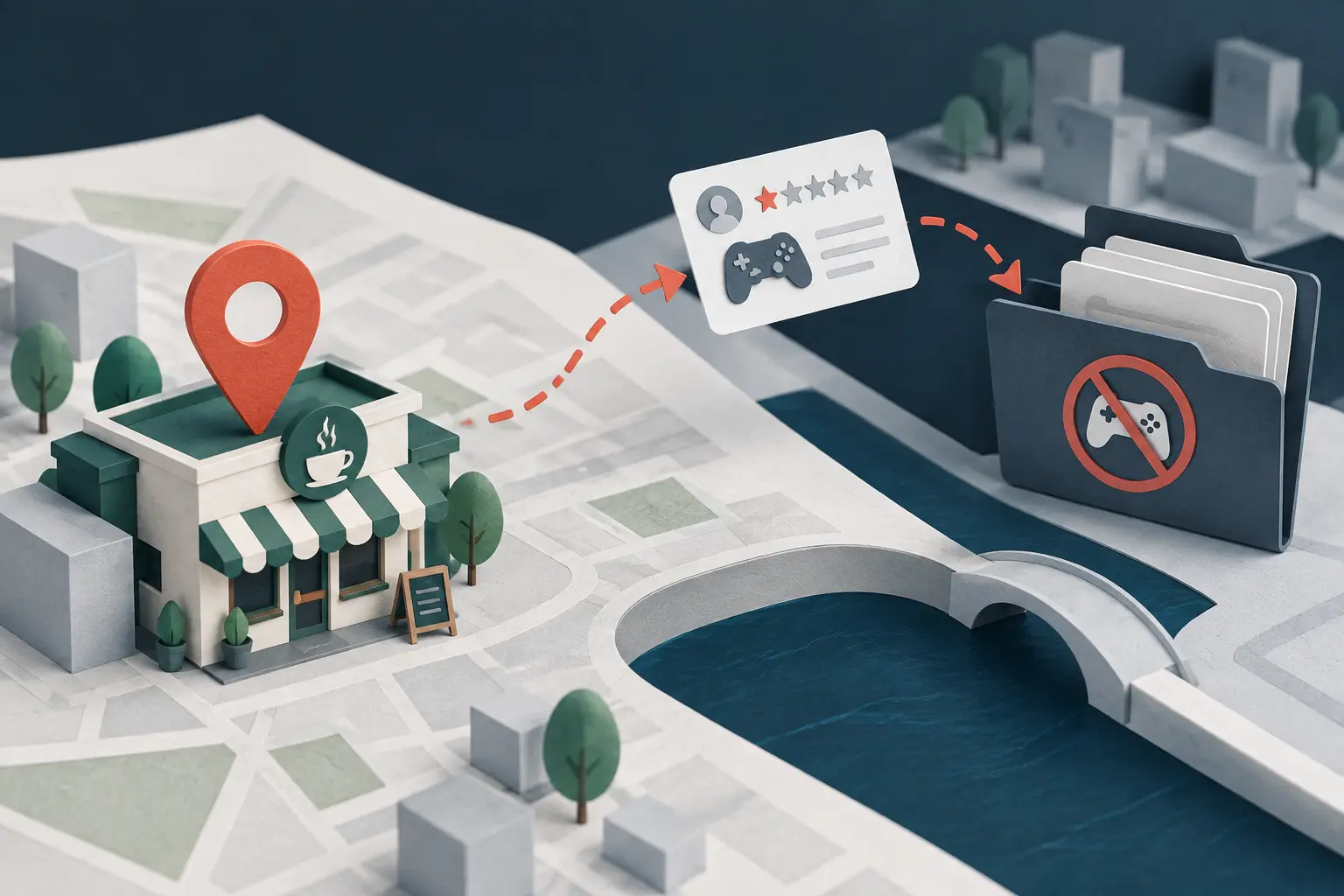
To remove an off-topic Google review, show that the content is not about an experience at your business or location. Preserve the complete review, identify the mismatched place, service, address, or event, and report the review under the closest off-topic category. A genuine complaint that wanders briefly is not automatically off-topic.
What Google calls off-topic content
Google says contributions should be based on experiences at a specific location. It does not allow general political or social commentary or personal rants that are disconnected from the place.
The central question is relevance, not fairness. Does the review help a reader understand an experience with this business?
Strong examples of an off-topic review
A review names a different restaurant, describes a product the business never sells, complains about street parking controlled by the city, or discusses a news event with no connection to the location. Those facts create an observable mismatch.
A review can still be relevant without a purchase. A call, estimate, attempted visit, cancellation, or interaction with staff may be a genuine experience.
Evidence checklist
- Full review screenshot and direct URL
- Business and location named in the review
- Products or services mentioned
- Nearby business with a similar name
- Public proof of the mismatch
- Any genuine call, quote, visit, or cancellation
- Date reported and decision status
Check for a wrong-location or wrong-business mix-up
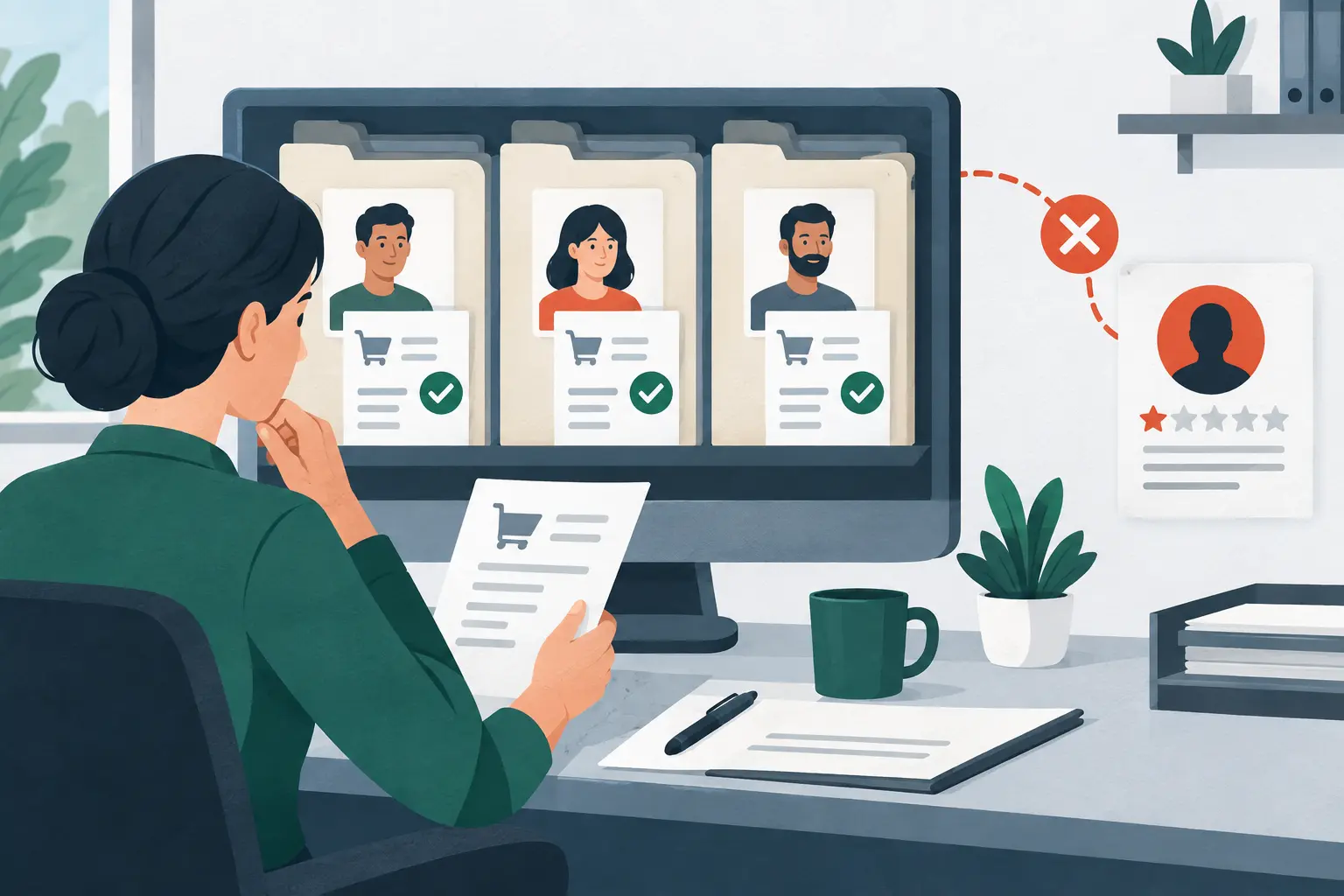
Compare the names, addresses, products, staff names, and service area mentioned in the post. Search nearby businesses with similar names. Save screenshots of the relevant public facts.
If the reviewer clearly describes another business, our wrong-business review guide covers the more specific evidence pattern.
How to document the mismatch
Create a short two-column note: what the review claims and what the business actually offers or controls. Link to public service pages or location information where useful. Avoid uploading private customer records for an issue that can be proved publicly.
Keep the explanation short enough that the mismatch is obvious. The goal is not to submit the business autobiography.
How to report the review
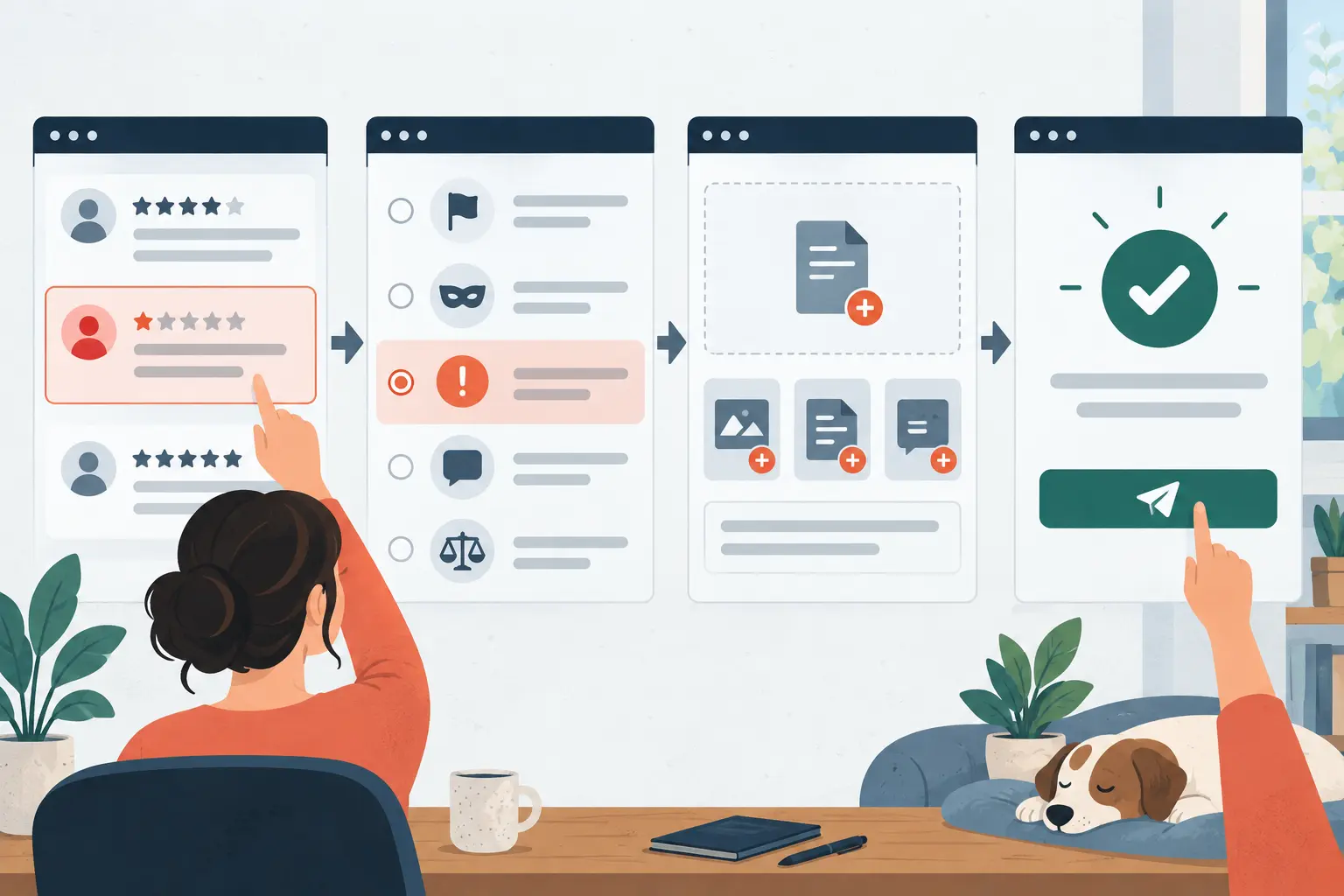
Use the review’s Report option or the Reviews Management Tool and select the closest off-topic reason. Track the status and allow the initial review to finish.
Do not organize mass reports. Google does not publish a vote threshold, and repeated flags do not convert relevant criticism into an irrelevant post.
A neutral response while it is pending
If readers may be confused, respond without attacking the reviewer: “The services described do not match our business or this location. We would be glad to help if the reviewer can provide the correct service details.”
That response makes the mismatch visible while preserving room for an honest mistake.
When the review is negative but still relevant
If the post describes a real interaction, Google may leave it up even when details are disputed. Respond to the concern and document the disagreement privately.
Appeal only if you can sharpen the relevance issue or identify a separate policy violation. A bad opinion is still on-topic when it concerns the business.
Frequently asked questions
It depends. If the business controls the parking experience it may be relevant. A city-controlled issue with no business connection is a stronger off-topic case.
Yes. Someone may review a call, estimate, attempted visit, or other genuine interaction without becoming a customer.
That can be strong evidence of a wrong-business or off-topic post. Preserve the exact name and location mismatch.
A polite request may work when the mistake is obvious, but do not pressure, threaten, or offer an incentive.
If Google offers the one-time appeal, use it only when you can explain the mismatch more clearly.
Need a policy-based second look?
Send the review link and the evidence you already have. We will screen the case against Google policy and tell you whether it appears worth pursuing.
Related Google review guides
Sources
Primary sources: Google Maps prohibited and restricted content policy and Google review reporting and appeal instructions. Policy wording and workflows were reviewed September 2026.