Google Review Removal for Denver Contractors
A disputed review can reach homeowners before your estimate does. We help Denver-area contractors investigate fake, non-customer, competitor, former-employee, extortion, and policy-violating reviews without making claims the evidence cannot support.
Serving Denver-area businesses remotely. No office visit or account password required.

Quick answer
A contractor should first determine who actually interacted with the business: property owner, tenant, general contractor, subcontractor, spouse, employee, lead, or cancelled estimate. If no genuine experience exists, or the reviewer has a prohibited conflict, document the records and report the review under the closest Google policy. A missing invoice alone is not always enough.
Why contractor reviews are unusually messy
Construction and home-service jobs involve more people than the name on the contract. A tenant may review work ordered by a landlord. A homeowner may review a subcontractor. A neighbor may complain about parking, noise, or a permit. A lead may review the estimate process without hiring anyone.
That means “not our customer” needs a careful investigation. The strongest case explains who could have had a genuine interaction, what records were checked, and which facts make the review impossible, conflicted, or prohibited.
Common fact patterns
- Reviewer cannot be matched to a job, estimate, dispatch, call, or service address
- Competitor owner, employee, or marketing account posts the review
- Former worker uses reviews to continue an employment dispute
- Review describes work performed by another company or at another property
- Payment demand, refund leverage, threats, or personal information appears in the content
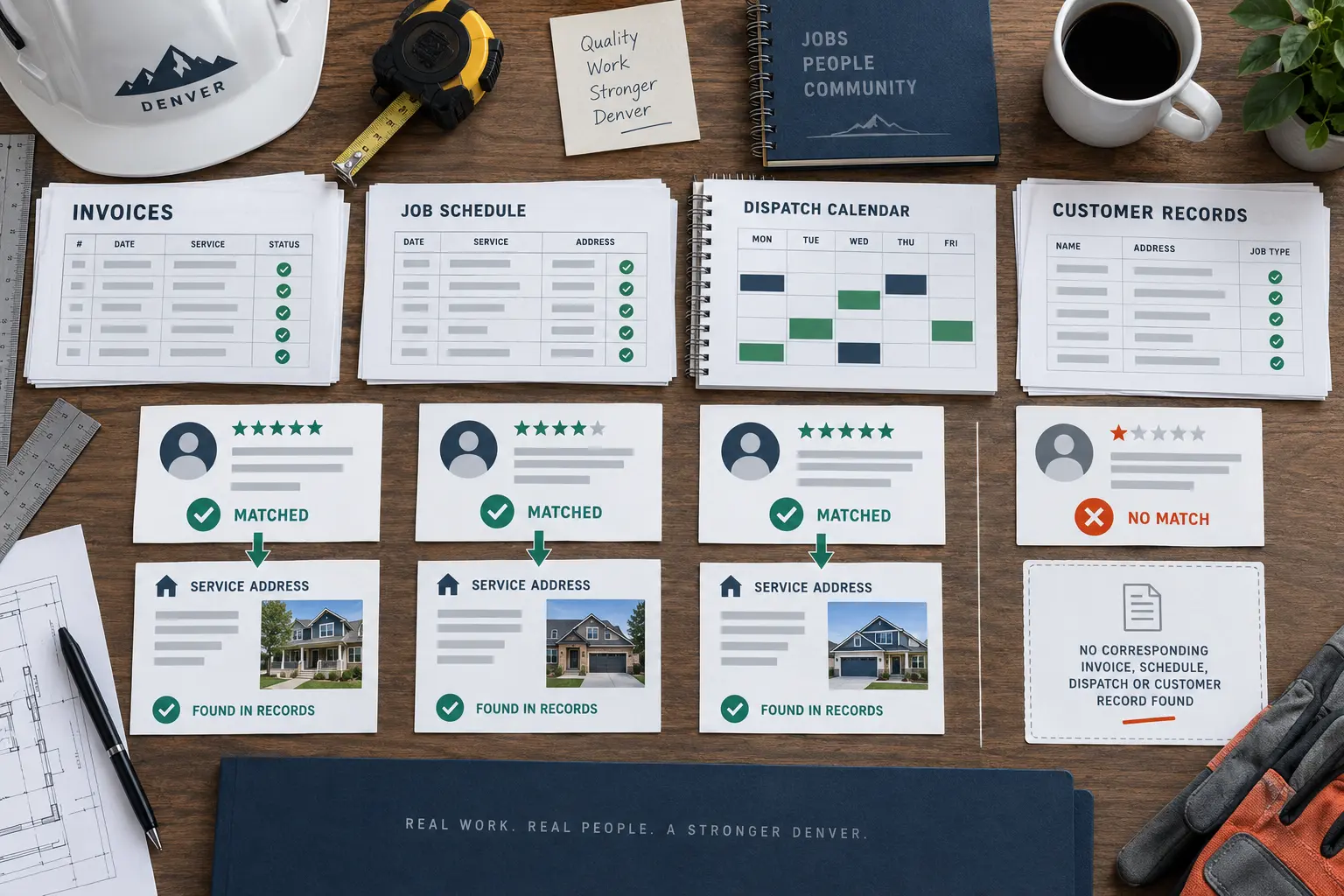
Build the evidence from job records
Start with the systems you already use to run the business. Search reasonable versions of the reviewer name, then compare the review details with dates, addresses, technicians, crews, services, estimates, and complaints.
Contractor evidence checklist
- CRM and lead-source records
- Estimates, invoices, signed contracts, and change orders
- Dispatch history, technician notes, and call recordings where lawful
- Service address and property-owner records
- Cancelled jobs, no-shows, warranty calls, and third-party bookings
- Reliable evidence of a competitor or employment connection
Match the policy to the facts
No genuine experience
A profile that cannot be tied to any job, estimate, call, visit, dispatch, property, or related person may support a fake-engagement case. Strengthen it with a timeline conflict, wrong service area, copied text, competitor connection, or details your company could not have produced.
Use the full non-customer review checklist before concluding the reviewer never interacted with the company.
Conflict of interest
Current or former workers and competitors may have a biased relationship to the business. Document the connection accurately. Do not assume every critical review from an industry contact is automatically removable.
Read the guides for competitor reviews and former employee reviews.
Threats, extortion, or privacy
Preserve any demand for money, free work, or another benefit tied to removing or withholding a review. If the review exposes private information or threatens harm, identify the exact content without repeating it publicly.
A genuine negative job experience
Scheduling problems, workmanship disputes, pricing disagreements, missed expectations, and blunt opinions may remain when they describe a real experience and do not otherwise violate policy. A calm response can show future customers that the contractor takes concerns seriously.
One focused appeal beats a pile of duplicate reports.
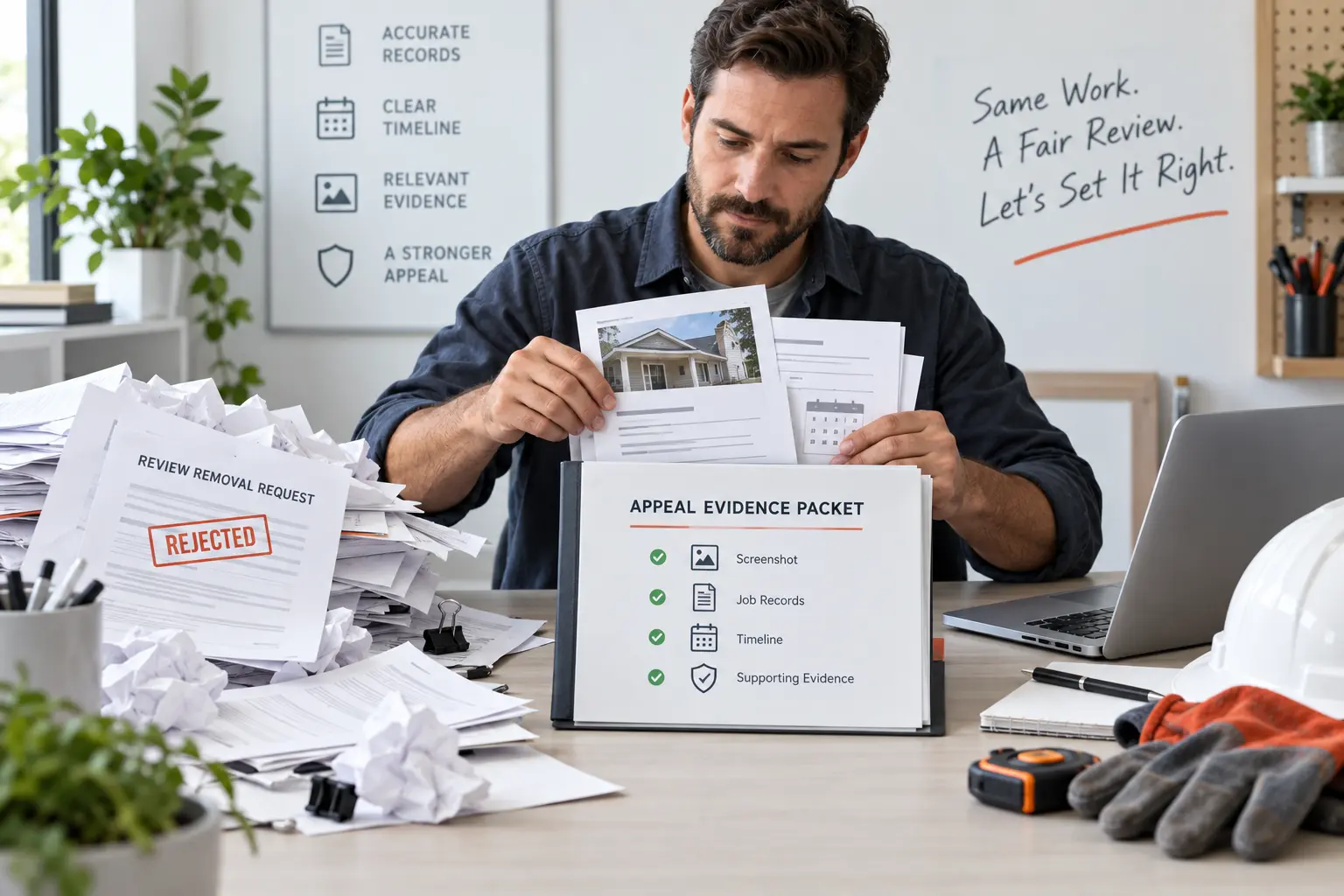
If Google rejects the initial report and the review is eligible, prepare the one-time appeal around the strongest policy issue. Lead with the relevant fact, cite the policy, and attach only evidence that proves that fact.
Do not send the entire job file or repeat the report from several accounts. A moderation reviewer should be able to understand the case quickly. See what to do when Google rejects a removal request.
Keep private records out of the public reply
A public response is not the place for invoices, addresses, payment history, health information, access codes, or speculation about the reviewer. A safer reply states that the company cannot match the review to the information provided and invites the reviewer to contact the office privately.
A practical process for Denver contractors
Preserve
Save the full review, direct URL, reviewer profile, date, and any demand or follow-up message.
Investigate
Search the job, lead, dispatch, address, call, employee, subcontractor, and complaint records.
Classify
Choose the narrowest accurate Google policy instead of listing every category.
Submit
Report once through the correct Business Profile or Reviews Management workflow and track the status.
Appeal or respond
Use the appeal only when supported. If the review is permitted, respond professionally and move forward.
For broader Denver service details, visit Google review removal for Denver businesses.
Frequently asked questions
Possibly. A person can have a genuine experience without signing the contract, such as a tenant, spouse, property manager, neighbor, or person who requested an estimate. Investigate the described interaction.
A competitor may be able to post, but a review motivated by a professional conflict rather than a genuine customer experience may violate Google policy. Document the connection and the absence of a legitimate interaction.
Employment disputes are different from customer experiences. Preserve proof of the employment relationship and focus the report on the applicable conflict or content policy.
No. Check estimates, leads, calls, cancellations, tenants, property owners, subcontractors, and third-party bookings before relying on the absence of an invoice.
No. Support is remote and available to eligible contractors across the Denver metro and nearby Front Range communities. No Denver office is claimed.
Put the evidence to work before the review does more damage.
Send the profile link and the reviews you want examined. We will identify plausible policy issues, explain the evidence gap, and tell you when a case is unlikely to qualify.