Google Won't Remove a Fake Review? What to Do Next
A rejected removal request is not always the end of the process. Eligible Business Profiles can use Google’s review appeals workflow, but the strongest appeal fixes a specific weakness instead of resubmitting the same frustration in a nicer font.
Policy-based guidance, reviewed October 2026.
Quick answer
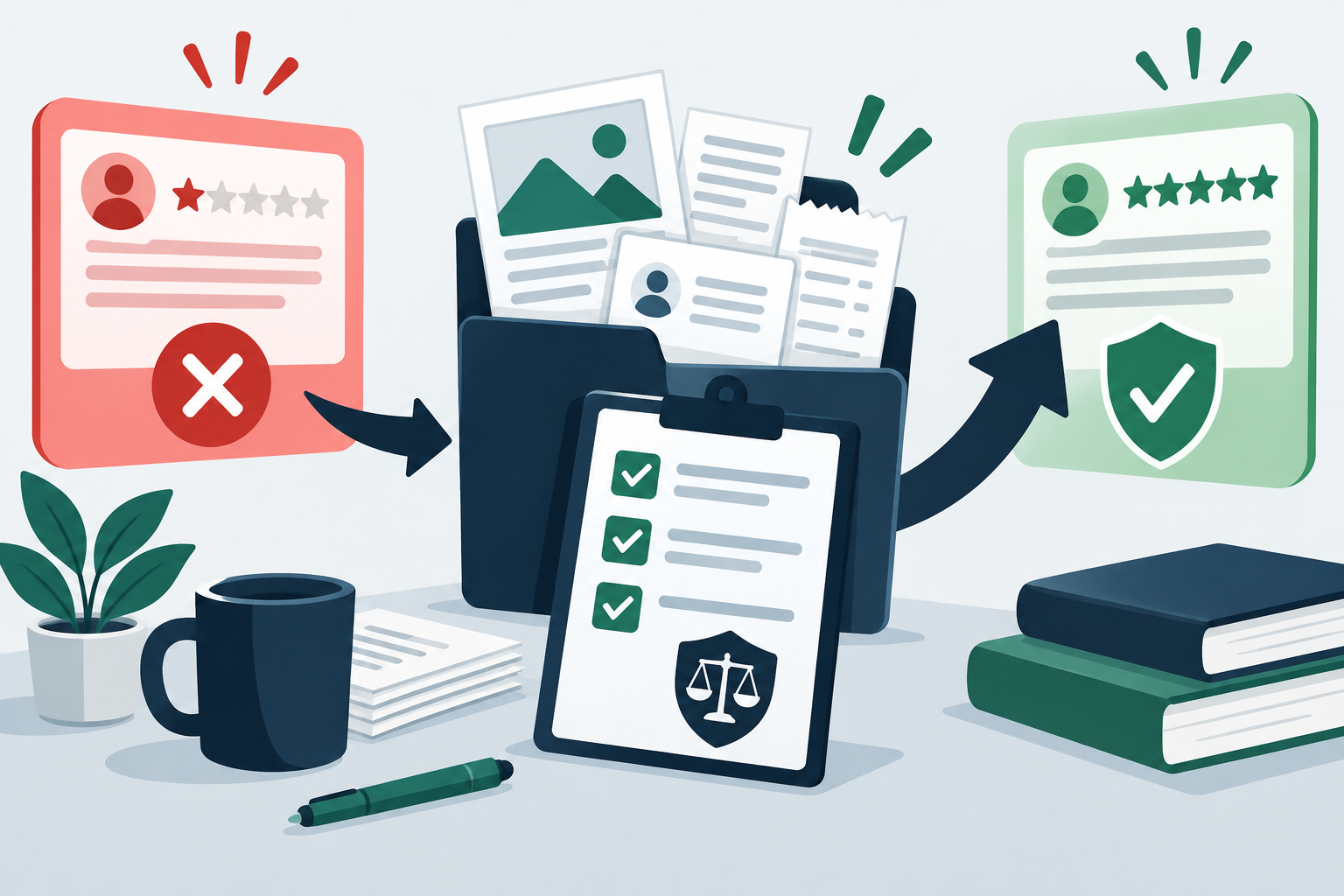
When Google says a reported review does not violate policy, that is the initial moderation decision, not proof that every statement is true. Check the status in the Reviews Management Tool. If an appeal is available, present the narrowest policy issue and evidence that directly supports it. Do not submit duplicate reports or simply repeat that the review is fake.
Google won't remove the fake review: confirm the actual status
Use the Reviews Management Tool to select the correct Business Profile and review the reported content. A case may still be pending, may show that the review was removed, or may state that no policy violation was found.
Do not appeal a case that is still being evaluated. Google says ordinary evaluation typically takes several days. Save the status screen and the direct review link for your records.
Why removal requests get denied
Common problems include choosing a broad or inaccurate reason, failing to show a conflict of interest, treating a negative opinion as prohibited content, or submitting evidence that does not connect to the reviewer or statement.
Google removes reviews that violate policy. It does not promise to resolve factual disputes between a business and a reviewer. Your appeal needs to make the policy question easier to see.
Evidence checklist
- Current status from the Reviews Management Tool
- Direct URL and full screenshot of the review
- Exact policy heading and offending content
- Evidence missing or unclear in the first report
- Short chronological explanation without speculation
How to write a stronger appeal
Lead with one sentence naming the policy. Follow with the exact words or conduct that violate it. Then list the minimum evidence needed to prove the point. Use dates, direct links, and objective records where possible.
Google currently says eligible Business Profiles may appeal up to 10 review decisions at a time. Group only cases that share a clear pattern. A mixed bundle of unrelated complaints can make the argument harder to follow.
What not to put in the appeal
Skip threats, insults, sales history that does not address the policy, and a line-by-line argument about every criticism. Do not attach private customer or employee data unless it is necessary, appropriate, and submitted through the correct private channel.
If the review contains personal information, use the precise disclosure and safety facts described in our personal information removal guide.
What if the appeal is denied?
Prepare a calm public response and continue documenting any new policy violations. Google also describes additional dispute options for certain users in the European Economic Area. Legal removal requests are a separate process and may be appropriate only when content violates applicable law.
This article provides general platform guidance, not legal advice. For defamation, threats, or safety issues, speak with qualified counsel or the appropriate authorities.
Frequently asked questions
Google describes the review-removal appeal as a one-time appeal for eligible decisions.
Wait for the evaluation to finish and confirm the decision in the Reviews Management Tool.
Google currently says eligible profiles can select up to 10 review decisions for an appeal.
No. Google still decides whether the content violates policy.
Google may not have enough visible evidence, the selected policy category may not fit, or the review may describe an interaction Google considers genuine. Use the appeal to clarify the strongest supported issue.
Professional help can be useful when the case has a plausible policy basis but the evidence or appeal needs organization. No provider can guarantee that Google will reverse the decision.
Need a policy-based second look?
Send us the review link and the evidence you already have. We will tell you whether the case appears worth pursuing before you spend more time on it.
Related Google review guides
How many reports it takes | Can a business delete reviews? | Defamatory reviews | Google reporting policy
Google review removal timeline
Can you hire someone to remove Google reviews? | One-star rating with no comment
See 17 reasons Google may remove a review
Build a stronger fake-review evidence file | Appeal evidence checklist
Sources
Primary sources: Google’s reporting and appeal instructions, Reviews Management Tool, and Google’s appeal guidance.
Continue with the next step
Use the guide that matches the current status or the evidence you can actually prove.
No Appeal Option
What to check when the appeal control is missing.
Appeal Evidence Checklist
Organize the facts before submitting the appeal.
Removal Status Pending
Confirm whether Google has actually made a decision.