How to Remove a Fake Google Review
A fake review is not removed because a business calls it fake. The strongest cases connect the review to Google’s actual policies, preserve the right evidence, and use the reporting and appeal process in the correct order.
Policy-based guidance, reviewed October 2026.
Quick answer
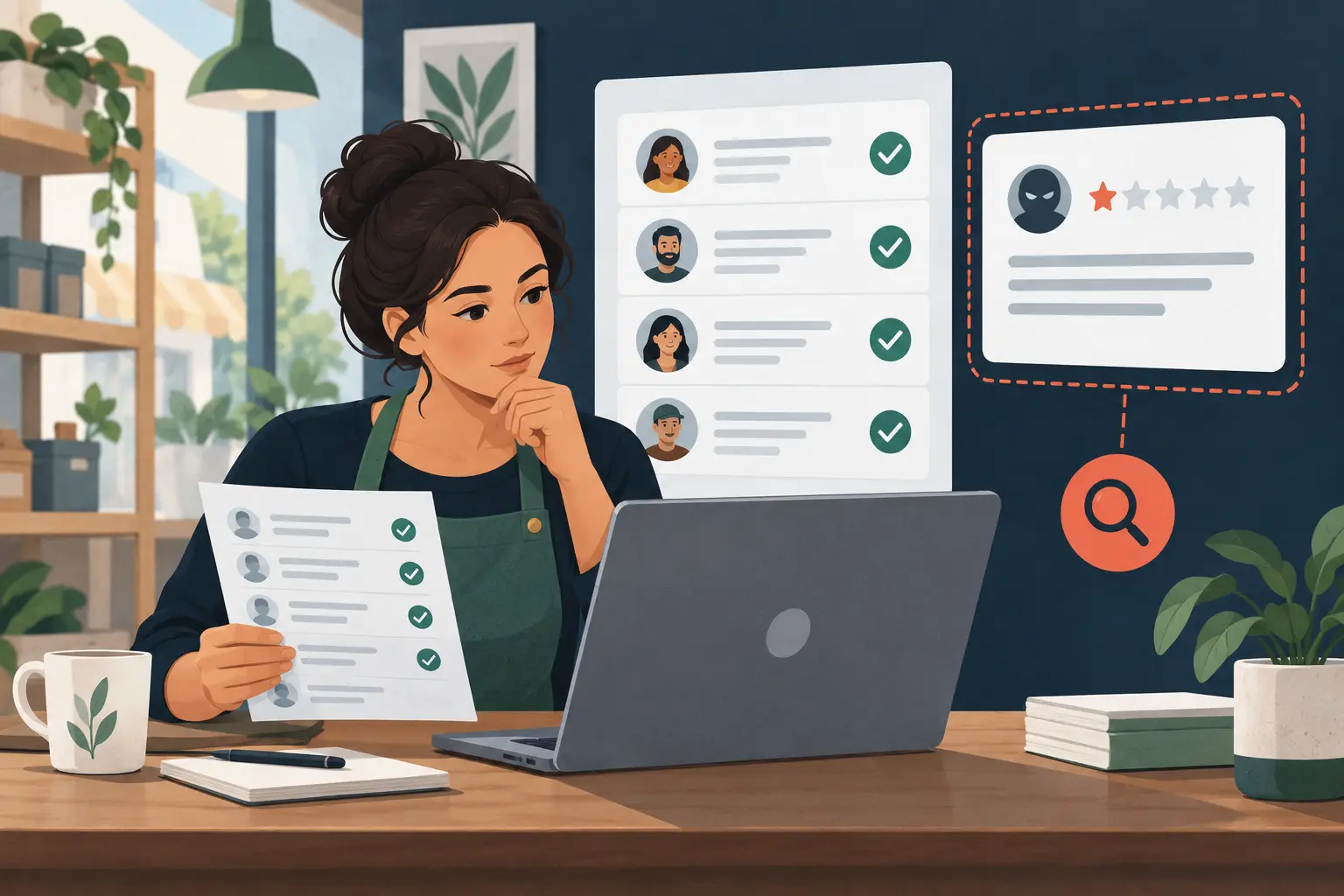
To request removal, save the review link and a complete screenshot, determine whether it reflects a genuine experience, select the narrowest accurate policy category, and report it through your Business Profile or Google’s Reviews Management Tool. Google decides whether the review violates policy. A negative but genuine review may remain.
What Google considers a fake review
Google’s Maps policy says ratings and reviews should reflect an actual, genuine and unbiased experience. Fake engagement includes content that is not based on a real experience or does not accurately represent the location or product.
That definition matters. A review can be harsh, mistaken, or unfair without being fake. Start by separating an identifiable policy issue from a disagreement about what happened. If the reviewer appears connected to another business, see our guide to competitor Google reviews. If the profile belongs to a current or former worker, use the former employee review guide.
Preserve the review before doing anything
Take a full screenshot that shows the reviewer name, star rating, review text and date. Save the direct review link and capture the reviewer profile only to the extent needed to document a relevant connection or pattern.
Do this before replying or reporting. Reviews can be edited, names can change, and public profile details can disappear. Keep the evidence private. Do not publish customer records or personal information in your response.
Evidence checklist
- A full, uncropped screenshot of the review
- The direct review URL and reviewer profile URL
- Customer, invoice, appointment and lead-record searches
- Evidence of a competitor, employment or other conflict when relevant
- The exact Google policy language that fits the facts

How to build a stronger removal case
Organize evidence around one claim: why this contribution may not represent a genuine experience. Search reasonable variations of the reviewer’s name, email and phone number. Check completed jobs, estimates, cancelled appointments, online orders, household members and third-party bookings.
A missing name is useful context, but it is not proof by itself. The customer may use a nickname, another person may have booked, or the reviewer may have interacted without purchasing. The article on a review from someone who was never a customer explains this investigation in detail.
How to report the review step by step
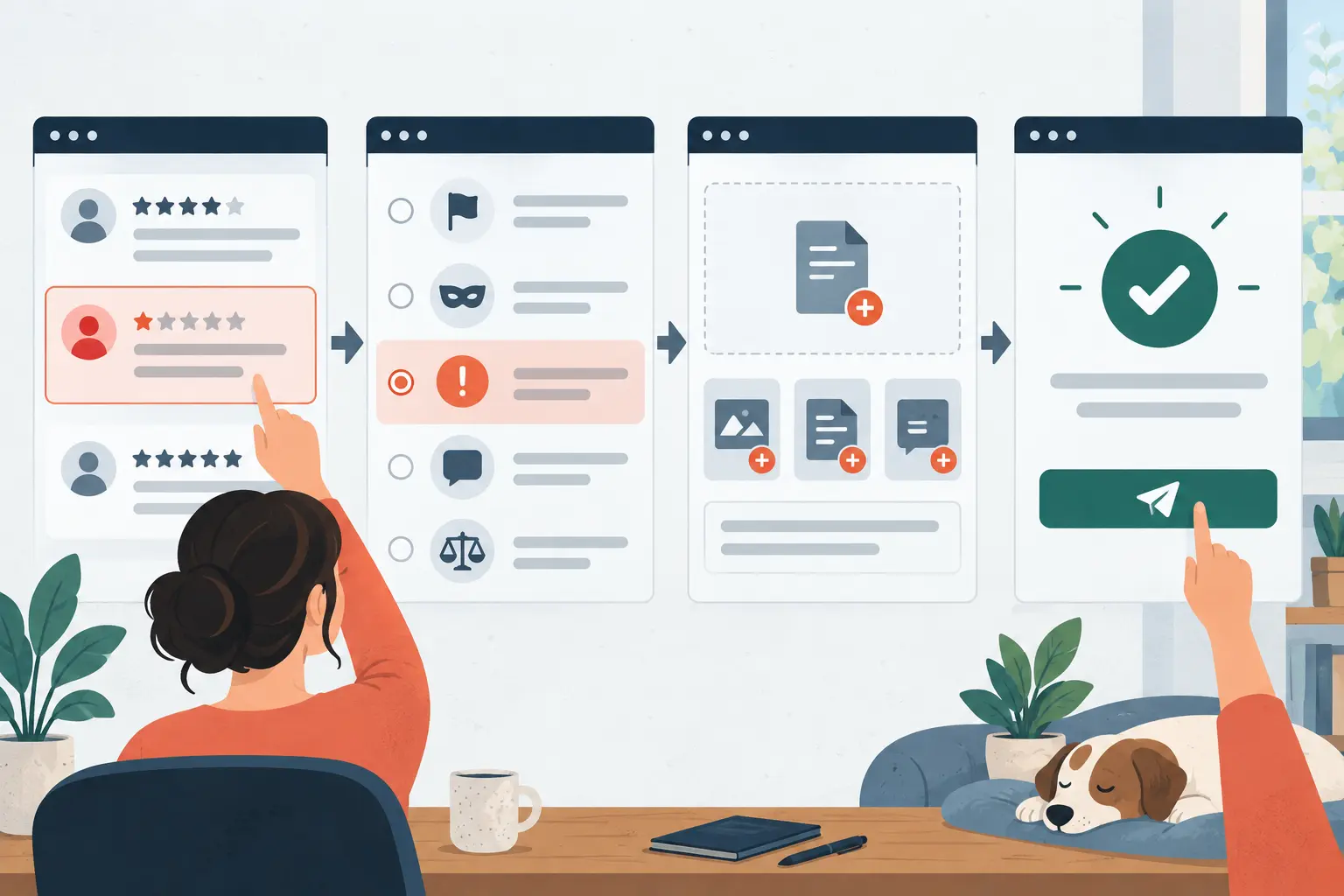
- Open the Business Profile connected to the correct Google account.
- Select Read reviews and locate the review.
- Choose Report and select the closest policy reason.
- Submit the report and save the date and confirmation.
- Track the decision through Google’s Reviews Management Tool.
Google says evaluation typically takes several days. Repeatedly flagging the same review does not turn a weak case into a strong one. One organized report is more useful than a small reporting parade.
What to do if Google rejects the report
If the status says no policy violation, review the evidence before using the available one-time appeal. The appeal should identify the policy, explain the relevant facts briefly, and attach evidence that directly supports those facts.
Do not simply resubmit “this is fake” in a longer paragraph. Our rejected review removal request guide shows how to prepare the appeal without burying the useful evidence.
What not to do
- Do not offer money, discounts or services for removal or revision.
- Do not organize mass reports from employees, friends or customers.
- Do not threaten the reviewer or accuse them publicly without evidence.
- Do not expose private customer information in your response.
- Do not claim a legitimate negative opinion violates policy merely because it hurts.
If the review appears genuine and policy-compliant, post a calm response and address the underlying issue. Google explicitly says disagreement alone is not a reason for removal.
A professional public response while the case is reviewed
Keep the response short and neutral: “We take feedback seriously, but we have been unable to match this review to a customer or transaction using the information provided. Please contact us directly so we can investigate.”
That response does not prove the review is fake. It shows future readers that the business is willing to investigate without turning the review section into a courtroom.
Frequently asked questions
No. A business can report a review, but Google makes the removal decision. The reviewer can also edit or delete their own contribution.
Not always. It is useful evidence, but businesses should check alternate names, household members, estimates, cancelled appointments and other possible interactions.
Google does not publish a required number. Policy fit and evidence matter more than the number of people who flag it.
Google provides a one-time appeal for eligible reviews through the Reviews Management Tool.
Need a policy-based second look?
Send us the profile link and the reviews you want examined. We will tell you which cases appear worth pursuing before you spend more time on them.
Related Google review guides
Review from someone who was never a customer | Competitor reviews | Former employee reviews | Appeal a rejected request
Google review removal for Denver businesses
Can you hire someone to remove Google reviews?
See 17 reasons Google may remove a review
Evidence checklist for a fake Google review | AI-generated fake reviews
Sources
Continue with the next step
Use the guide that matches the current status or the evidence you can actually prove.
Fake Review Evidence
Build a record that supports the policy category.
Never a Customer
Investigate a reviewer you cannot match to records.
Competitor Review
Document a professional conflict of interest.