What Evidence Helps Remove a Fake Google Review?
“This review is fake” is a conclusion. Google needs the facts underneath it. A useful case file connects the review to a specific policy and explains what was checked, what was found, and what remains uncertain.
Policy-based guidance, reviewed September 2026.
Quick answer
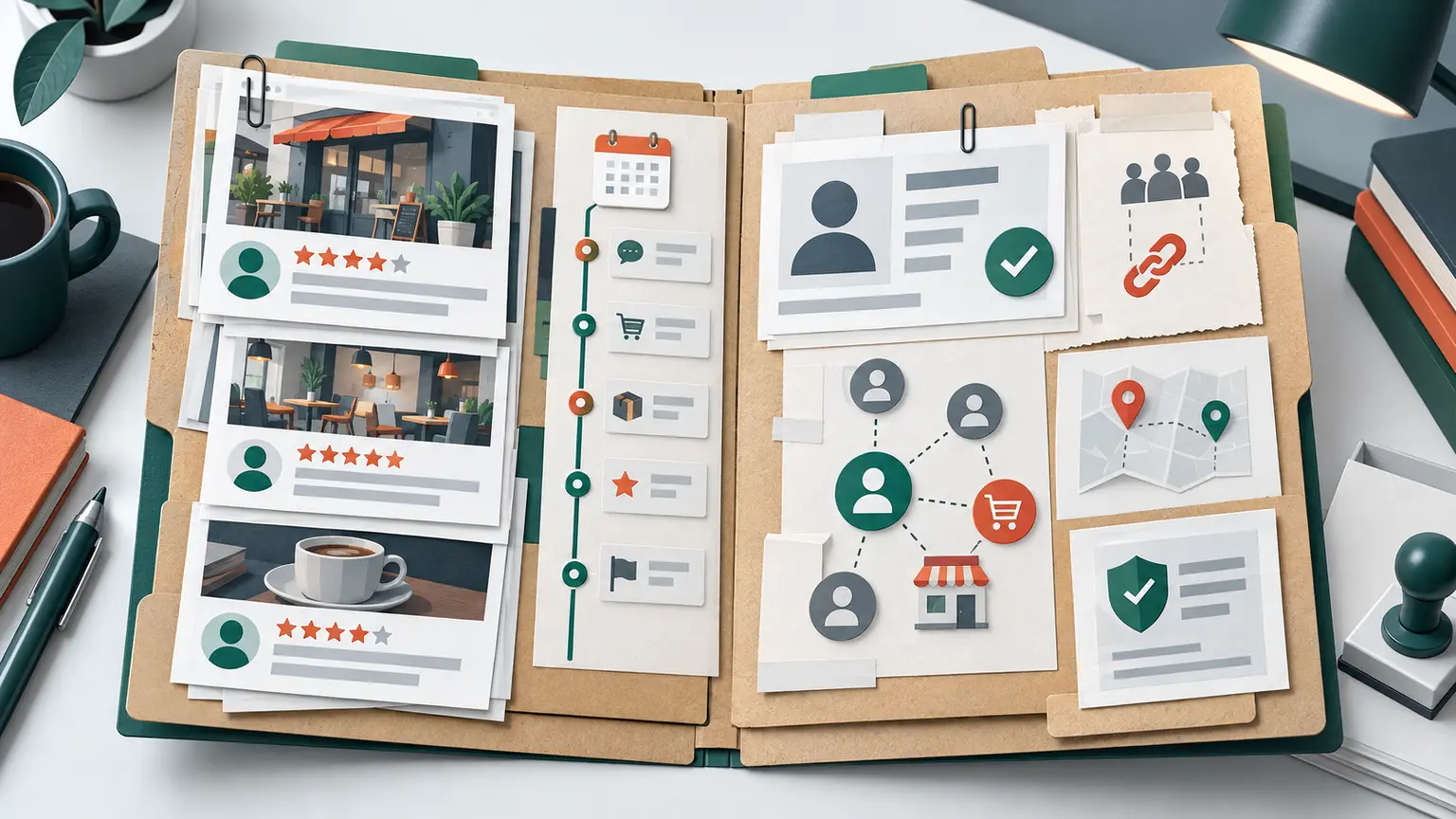
Helpful evidence for a fake Google review includes the complete review and profile URLs, customer and lead searches, appointment and transaction records, communications, location and service mismatches, competitor or employment connections, duplicate wording, coordinated timing, and any payment or extortion messages. No single checklist item guarantees removal.
Start with the review itself
Capture the reviewer display name, profile URL, direct review URL, date, rating, full text, attached media, edits, and the Business Profile where it appears. Use uncropped screenshots.
Give every file a date and descriptive name. Evidence that cannot be matched to a review is mostly décor.
Search more than completed customers
Check leads, estimates, calls, chats, appointments, cancellations, warranties, household members, third-party bookings, tenants, passengers, and other business-specific interactions. Record where and how you searched.
A person can have a genuine experience without completing a purchase. Your investigation should reflect that.
Evidence checklist
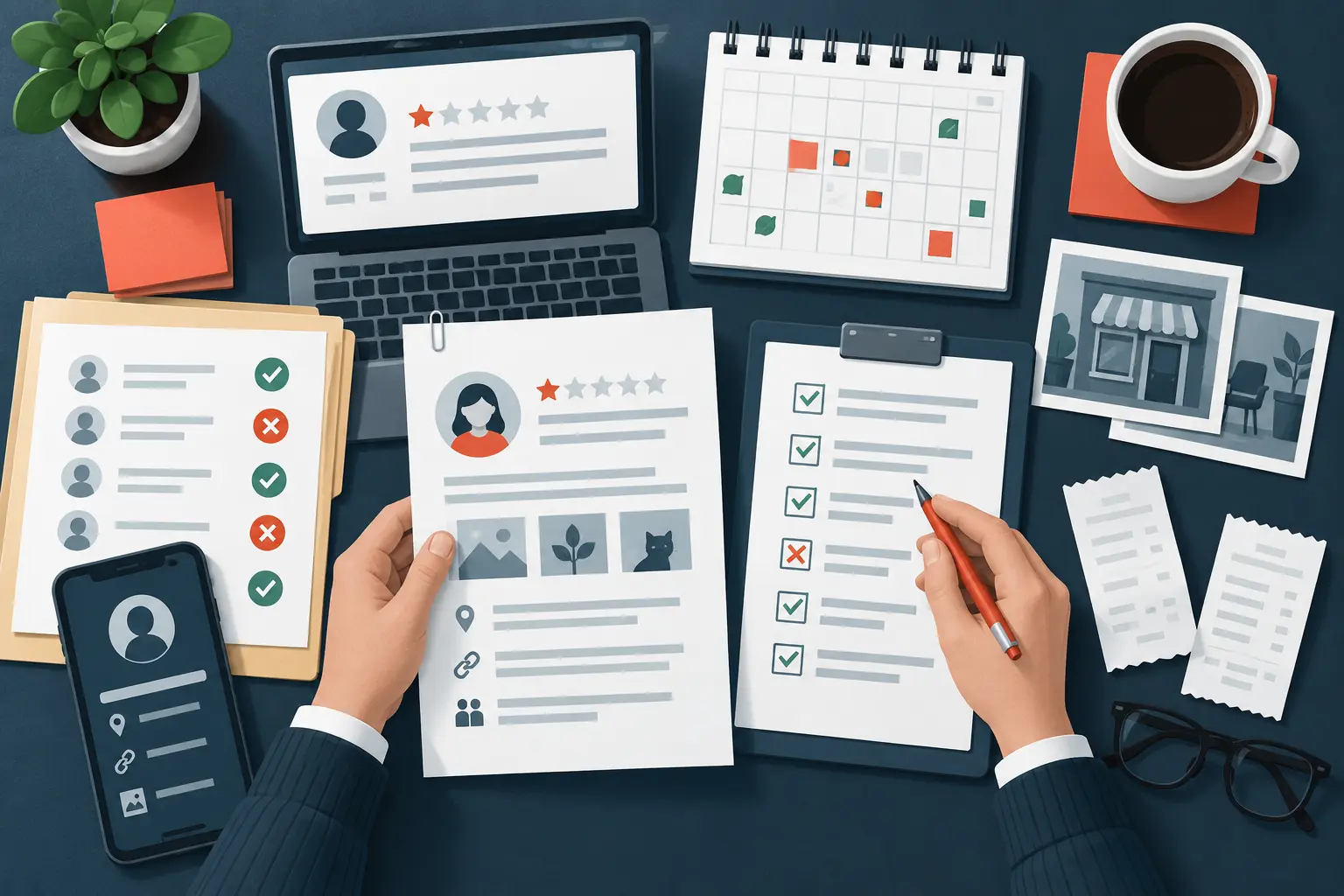
- Uncropped review screenshot
- Direct review and profile URLs
- Customer, lead, call, and booking searches
- Service, location, and staff mismatch
- Competitor, employee, vendor, or family relationship
- Duplicate wording and coordinated timing
- Payment, incentive, threat, or extortion messages
- One-page policy summary
- Report and appeal tracking log
Match evidence to one policy category
No-experience records may support fake engagement. Employment, vendor, family, or competitor evidence may support conflict of interest. Duplicate wording and sudden volume may support repetitive content or rating manipulation.
Use our 17 policy reasons Google may remove a review to choose the narrowest supported path.
Use public profile context carefully
Relevant public clues include reviews of several competitors, repeated scripts, claimed employment, business affiliations, unusual timing, and location patterns. Save the URL and date.
A sparse profile, foreign location, or unusual name is not proof. Avoid turning stereotypes into evidence.
Build a short evidence summary
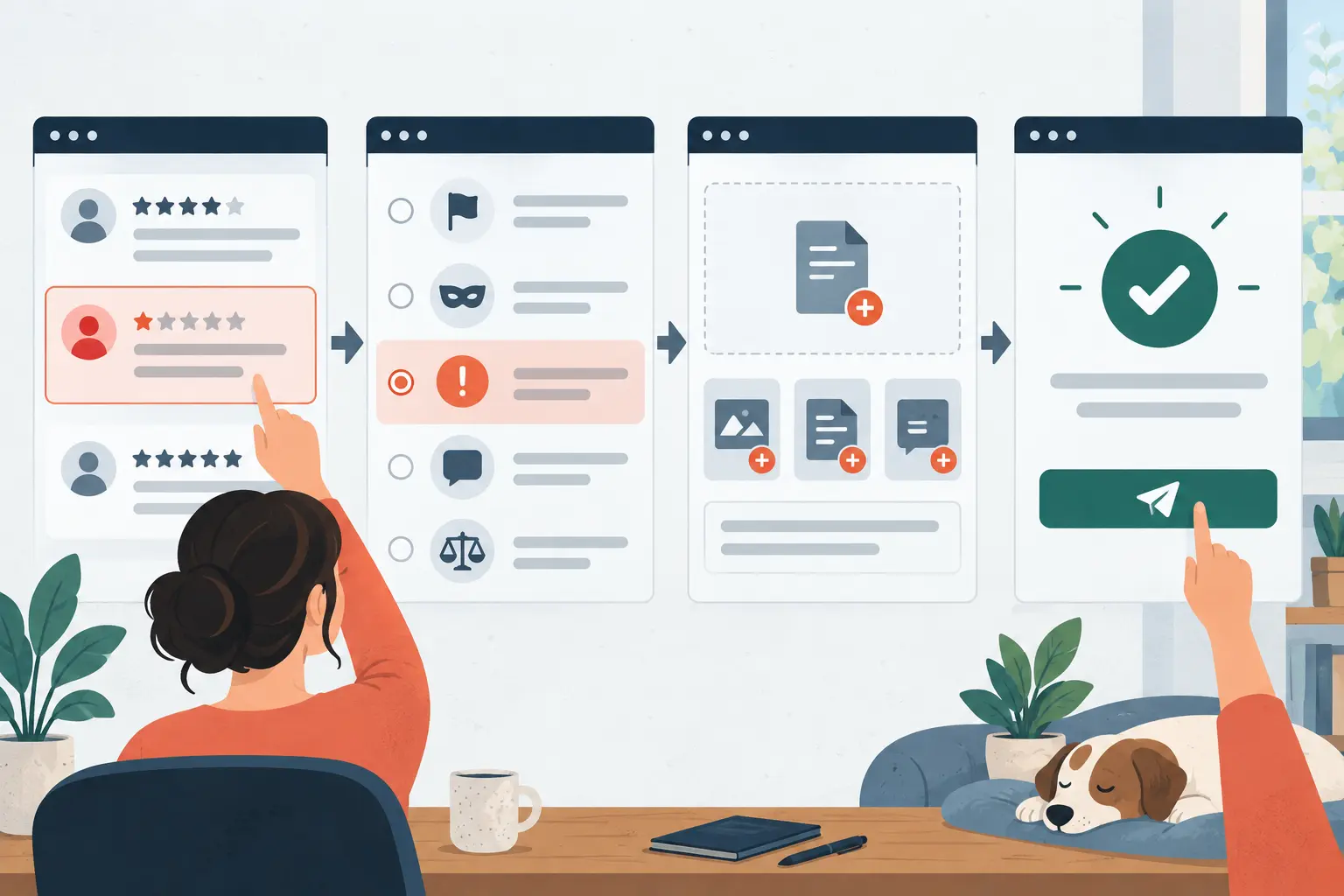
Write five parts: review identifier, policy category, key facts, records checked, and supporting links or attachments. Keep assumptions labeled as assumptions.
The best file is often one page plus organized exhibits, not a forty-page emotional memoir about Tuesday afternoon.
Submit and track the case
Report through the Business Profile or Reviews Management Tool and record the date, category, confirmation, and status. Google says initial evaluation typically takes several days.
If denied, use the one-time appeal only when you can clarify the policy or add meaningful evidence. See what to do after a rejected report.
Evidence to avoid
Do not fabricate customer searches, edit screenshots deceptively, buy reports, impersonate a reviewer, access private accounts, or harass the person. Do not include unrelated medical, financial, or personnel records.
A legitimate process should improve the truthfulness of the case, not merely make it louder.
Frequently asked questions
No. Check non-purchase interactions, alternate names, household members, leads, estimates, and third-party bookings.
Available fields vary by workflow. Preserve organized evidence so you can use the relevant facts in a report or eligible appeal.
No. It is one clue, not proof of no genuine experience.
No. Google evaluates policy compliance, and mass flags are not a substitute for evidence.
Evidence that directly connects the contribution to a specific policy violation while honestly accounting for possible genuine interactions.
Need a policy-based second look?
Send the review link and the evidence you already have. We will screen the case against Google policy and tell you whether it appears worth pursuing.
Related Google review guides
Sources
Primary sources: Google Maps prohibited and restricted content policy and Google review reporting and appeal instructions. Policy wording and workflows were reviewed September 2026.