Can Google Reviews Be Traced?
Businesses can inspect the public reviewer profile and contribution history that Google chooses to display. They cannot use Business Profile to reveal a reviewer’s private email address, IP address, or hidden account data. Serious identification questions require proper legal channels, not internet sleuthing.
Policy-based guidance, reviewed October 2026.
Quick answer
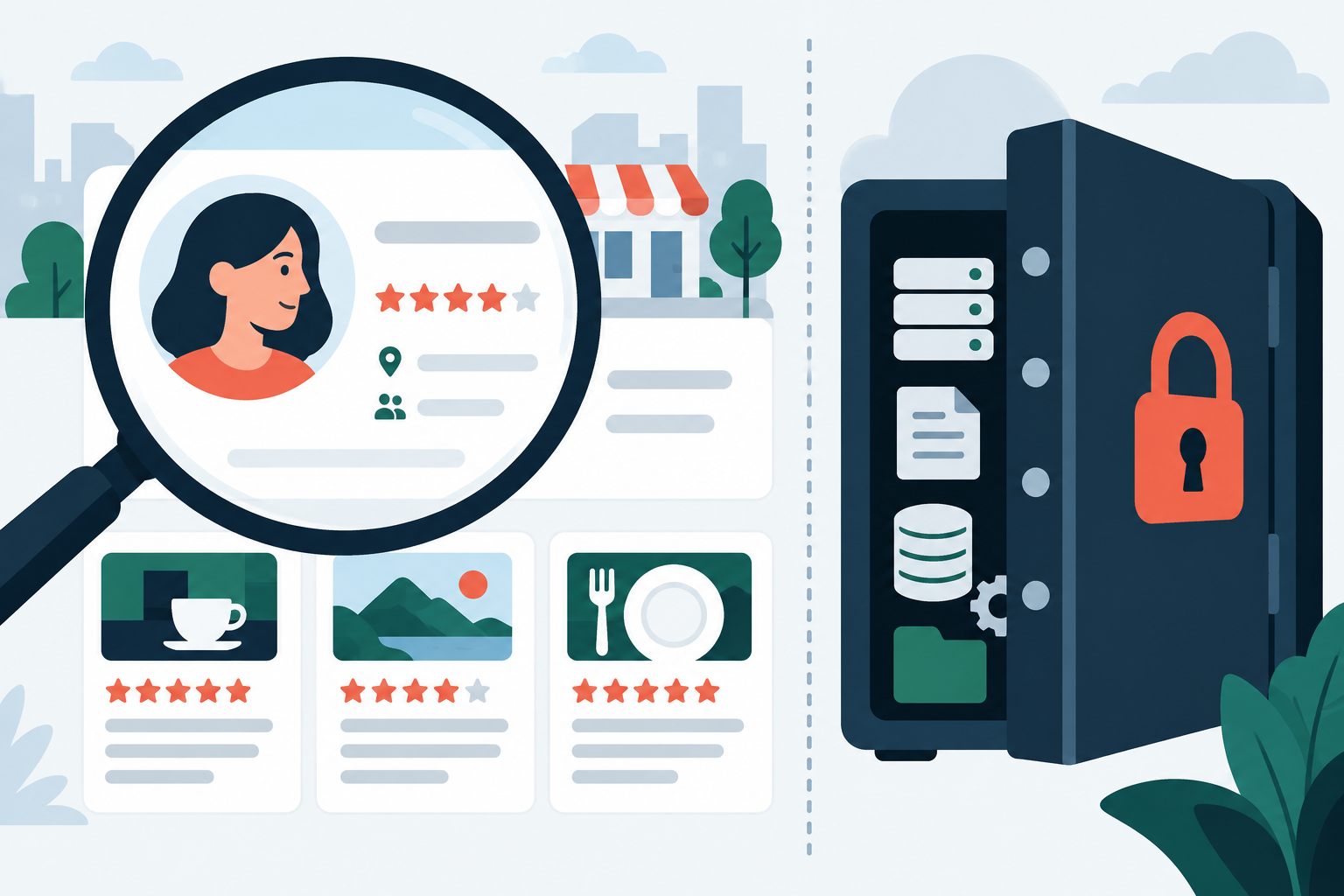
A Google review may be connected to a public profile name, photo, and visible contributions, but that does not necessarily identify the person behind it. Businesses do not receive private account or device data through the review dashboard. Google may hold additional data under its privacy practices and lawful processes.
What a business can see
Open the reviewer’s public profile from the review. Depending on the user’s settings and activity, you may see a display name, profile photo, other public reviews, ratings, images, or contribution patterns.
Treat these as clues, not proof. A display name can be common, abbreviated, changed, or unrelated to a customer record. Do not publicly accuse someone based on a matching name or profile photo.
What a business cannot see
The Business Profile interface does not provide the reviewer’s private email address, IP address, phone number, device identifier, or login records. A third-party “trace” service cannot reliably conjure data that Google has not made public.
Be cautious with anyone promising instant identification. That pitch can create privacy, security, and legal risks while doing nothing to strengthen a policy report.
Evidence checklist
- Direct review and public profile URLs
- Uncropped screenshots with dates and text
- Visible contribution patterns saved factually
- Internal records checked without public disclosure
- Policy evidence separated from identity guesses
How to investigate a suspicious review safely
Save the direct review URL, full screenshot, public profile URL, visible contribution history, date, rating, and exact text. Compare the content with your records without assuming that no name match means no customer interaction.
Look for objective policy signals such as a documented competitor connection, repeated text across businesses, impossible service details, extortion messages, or disclosed personal information. Our competitor review guide explains how to document a professional conflict.
When legal process may be relevant
In serious cases involving threats, impersonation, defamation, stalking, or safety concerns, qualified counsel can explain whether a lawful request for information is available and appropriate. Google publishes privacy and legal-request information, but access is not automatic.
Do not attempt to hack, deceive, dox, or harass a reviewer. Contact law enforcement for immediate threats or safety emergencies.
Focus the removal case on policy
You often do not need to identify the person to report a review. Google can evaluate content and account signals that are not visible to you. Build the strongest case from the policy violation and evidence you can lawfully document.
If the post contains a direct demand for payment or services, use the dedicated steps in our review extortion guide.
Frequently asked questions
No. Google Business Profile does not expose a reviewer’s private email address to the business.
Not through the Business Profile dashboard. Requests for nonpublic data require appropriate lawful process.
No. Treat public profile details as clues, not conclusive identity proof.
Not always. A report can focus on the content, account pattern, conflict, or other policy evidence.
Need a policy-based second look?
Send us the review link and the evidence you already have. We will tell you whether the case appears worth pursuing before you spend more time on it.
Related Google review guides
Sources
Primary sources: Google Maps content policy, Google Privacy Policy, and Google’s legal-removal overview.
Continue with the next step
Use the guide that matches the current status or the evidence you can actually prove.
Fake Name Reviews
What a fake display name does and does not prove.
Review Impersonation
How to document an account pretending to be someone else.
Fake Review Evidence
Records and profile signals worth preserving.