Google Review From Someone Who Was Never a Customer: What to Do
A reviewer you cannot identify may be fake, but “not in our system” is the beginning of the investigation, not the entire case. Check every reasonable route to a real interaction, document the result, and connect the facts to Google’s genuine-experience policy.
Policy-based guidance, reviewed October 2026.
Quick answer
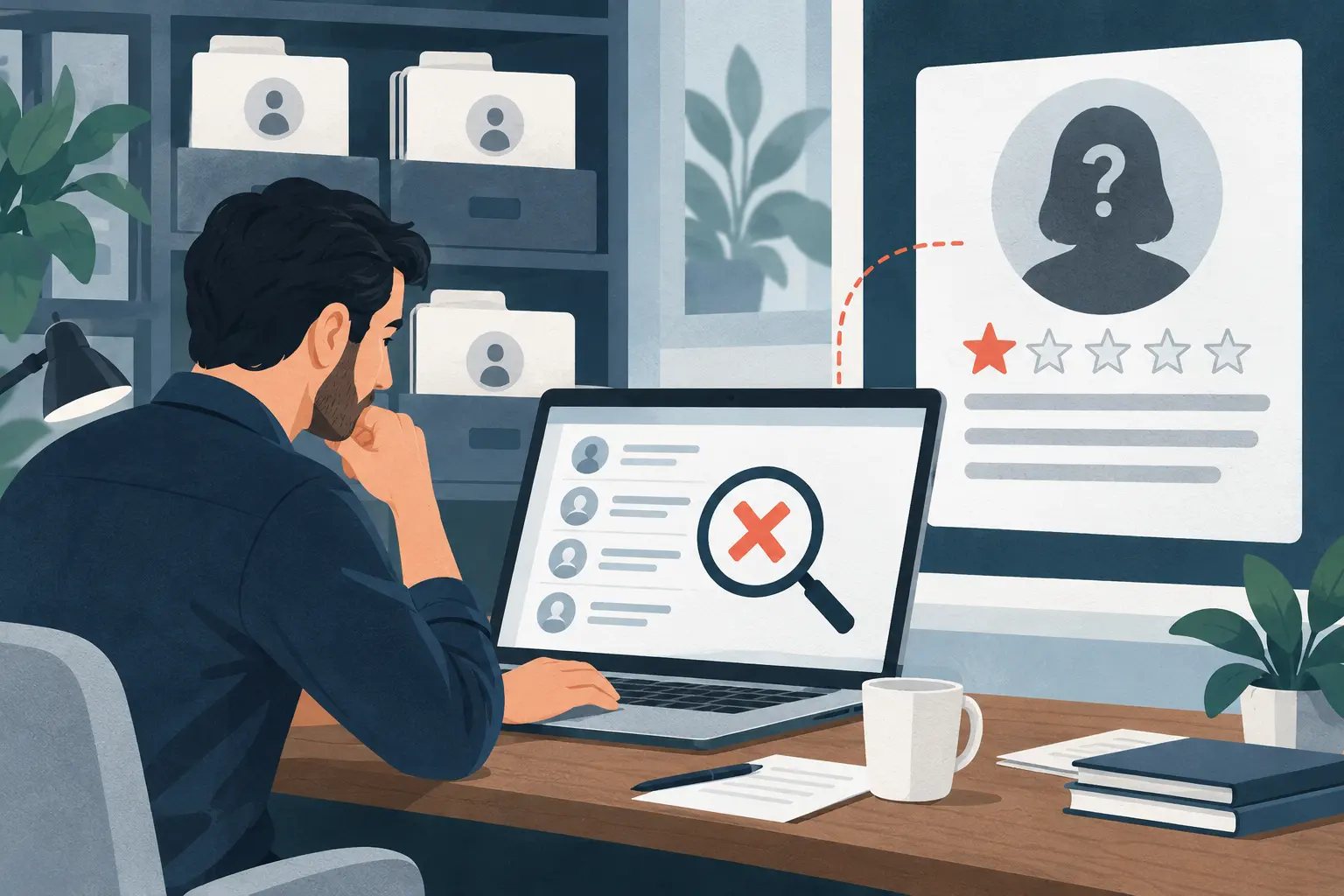
A review from someone who never had a genuine experience with the business may violate Google’s fake engagement policy. Before reporting it, search customer, lead, estimate, appointment and staff records using reasonable name variations. Preserve the review and explain the missing connection without claiming that a database search proves everything.
Does “never a customer” violate Google policy?
It can. Google says Maps contributions should reflect a genuine experience at a place or business. Content that is not based on a real experience falls under fake engagement.
However, a purchase is not always required for an experience to be genuine. Someone may review an estimate, phone call, consultation, attempted visit, delivery, cancelled appointment or interaction involving a family member. Focus on whether the described experience occurred, not only whether money changed hands.
First, rule out an unfamiliar but real customer
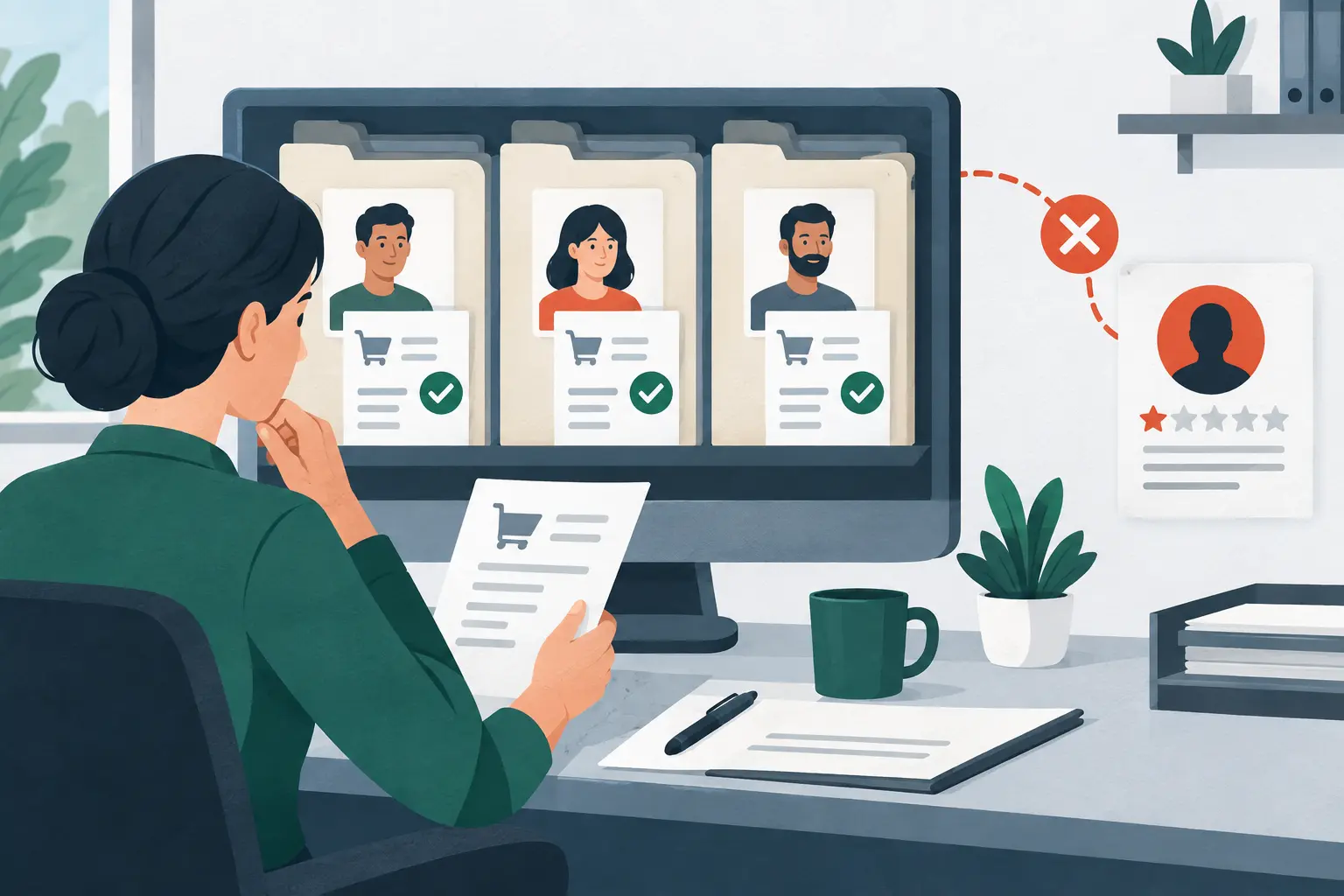
Search more than the exact display name shown on Google. A Google profile may use a nickname, maiden name, business name or abbreviated surname. The buyer and reviewer may also be different people in the same household.
Ask the employees who handled calls, estimates, complaints and walk-ins. Check whether the facts resemble another location, franchise, contractor or similarly named business. This protects you from reporting a real customer simply because their profile name is unfamiliar.
Records worth checking
- CRM, invoices, receipts and completed work orders
- Phone, email, chat and website lead records
- Estimates, cancellations and no-show appointments
- Bookings made by spouses, employees or third parties
- Staff recollections tied to the date and details in the review
What evidence is strongest?
The strongest evidence usually combines a thorough records search with something affirmative about the reviewer or the review. Examples include proof that the reviewer works for a competitor, the review describes a location you do not operate, the same text appears across unrelated profiles, or the timeline conflicts with documented business activity.
A bare statement that “we have no record” is weaker because Google cannot see every phone call, walk-in or household relationship. Keep an internal note showing which systems, date ranges and name variations were checked.
Evidence strength at a glance
| Evidence | How it helps |
|---|---|
| Confirmed competitor or employment connection | Supports a conflict-of-interest or biased-content case |
| No record plus impossible location or timeline details | Supports the claim that the experience did not occur |
| No exact customer-name match only | Useful context, but rarely conclusive by itself |
| “We do not like what they said” | Not evidence of a policy violation |
How to report an unknown reviewer
- Save the full review screenshot, direct URL and profile URL.
- Write a short internal summary of the records searched.
- Open your Business Profile or the Reviews Management Tool.
- Report the review under the closest accurate policy category.
- Track the status and preserve the decision for a possible appeal.
If you need the complete workflow, start with how to remove a fake Google review.
How to respond publicly without creating risk
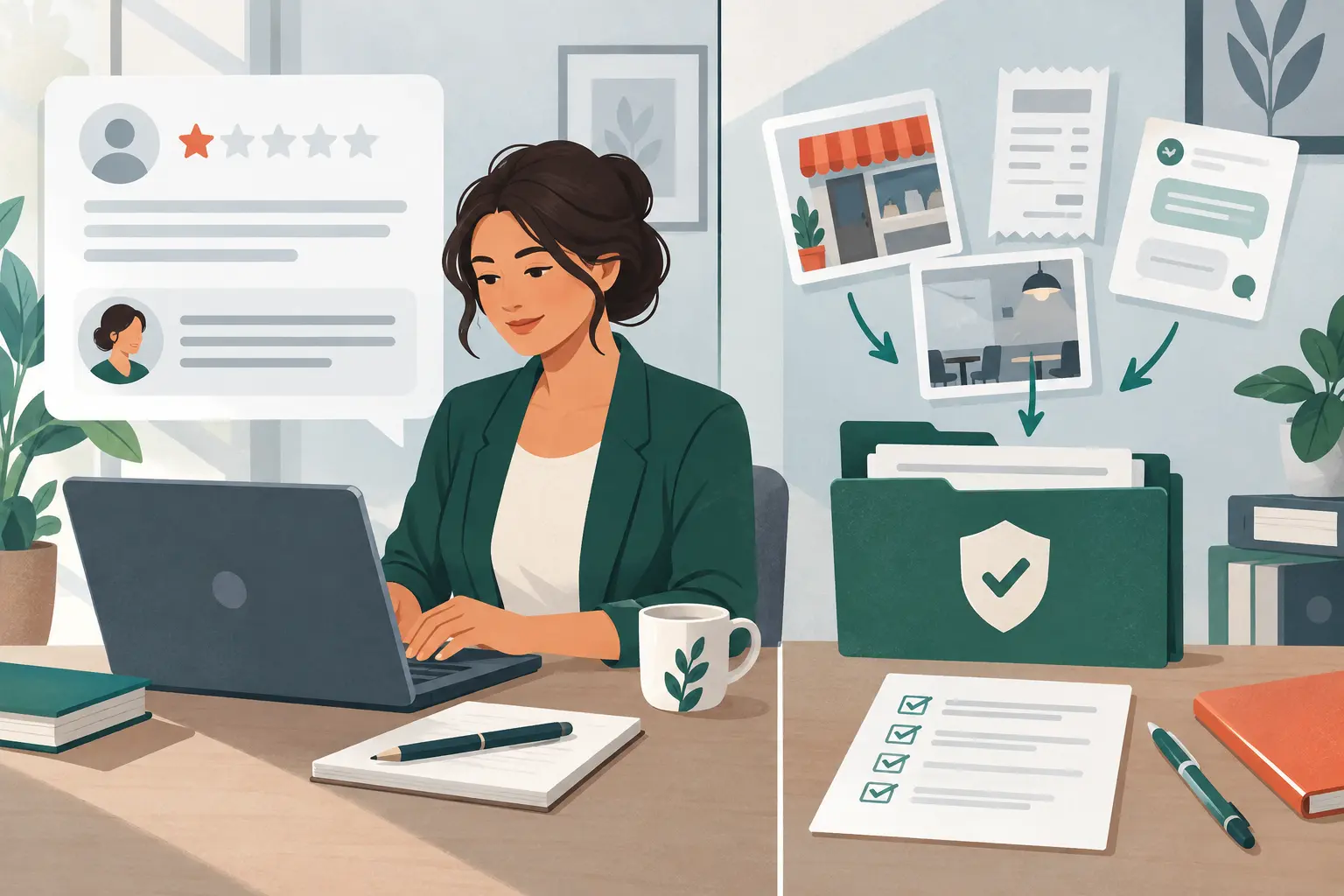
Use neutral wording that invites verification: “We have been unable to identify a customer or interaction matching the information in this review. Please contact us with the service date and details so we can investigate.”
Do not publish screenshots from your CRM, speculate about the reviewer’s identity, or disclose details about a person you think may be involved. A professional response is for future customers as much as it is for the reviewer.
If Google does not remove it
Check the report status. If Google finds no policy violation, eligible reviews can receive a one-time appeal. Add evidence that was missing from the first report and keep the explanation tied to the genuine-experience rule.
If the review still remains, leave the calm response in place and continue requesting honest feedback from real customers without incentives or review gating. A single disputed review should not tempt the business into creating a second policy problem.
When the issue may be a competitor or former employee
If the reviewer has a professional relationship with the business or an industry competitor, the more specific issue may be conflict of interest rather than simply “not a customer.” Use the competitor review evidence checklist or the former employee review guide to document that connection.
Frequently asked questions
Possibly. A genuine interaction can include a phone call, estimate, consultation, visit or attempted transaction. The key question is whether the review reflects a real experience.
Business records can support a case, but a missing exact name is not always conclusive. Explain what was searched and include other relevant evidence when available.
No. State that you cannot identify the interaction and invite the reviewer to contact you. Keep private records and speculation out of the public response.
Document the professional connection and report the narrower conflict-of-interest or biased-content issue.
Need a policy-based second look?
Send us the profile link and the reviews you want examined. We will tell you which cases appear worth pursuing before you spend more time on them.
Related Google review guides
How to remove a fake Google review | Competitor reviews | Former employee reviews | Can Google reviews be traced?
Google review removal for Denver contractors
Can you remove a one-star rating with no comment?
See 17 reasons Google may remove a review
Reviews posted by a customer’s friend or family member | Reviews left for the wrong business
Sources
Continue with the next step
Use the guide that matches the current status or the evidence you can actually prove.
Requested Only a Quote
An inquiry may still count as a genuine interaction.
Refused Service
When a pre-service interaction can support a review.
No-Show Customer
Evaluate reviews left after a missed appointment.